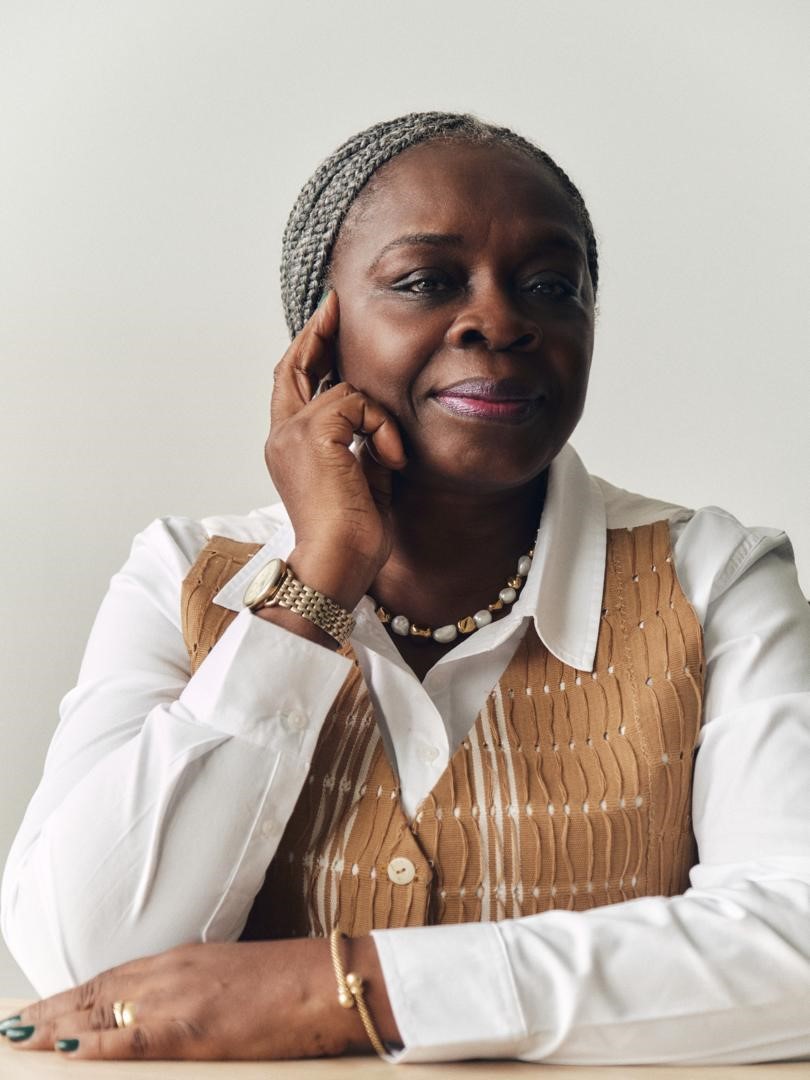
Inyang Sami-Orungbe is a certified retirement life coach who has dedicated her career to helping individuals transition confidently into life after work. With over 35 years of corporate experience, she now focuses on guiding professionals through structured retirement planning, mindset shift, financial readiness and lifestyle redesign. Through The Bloombox Platform — her specialist retirement coaching hub — she facilitates group pre-retirement programmes and offers personalised one-on-one coaching for individuals preparing to exit the workforce. In this interview with Anchor News Online, Sami-Orungbe shares insights on why many Nigerian employees misunderstand retirement, how young professionals can begin planning early, what mid-career workers can do to recover lost time, and the urgent reforms needed to strengthen workers’ financial security.
From your experience as a retirement life coach, what do you consider the biggest misconception Nigerian workers, especially young professionals, have about retirement planning?
They believe that it is something you start later. Many people still believe retirement is a distant event that really begins to matter in their 50s or when grey hairs start appearing. But after years of working with retirees across different sectors — banking, oil and gas, public service — I have seen firsthand that the real danger is delayed intentionality. People don’t start planning on time, and young professionals often assume that their current income is too small to plan with, or that their career trajectory will sort everything out eventually. They even imagine that pensions and RSAs will magically take care of their future.
But the truth is this — retirement is not about age — It is a financial position and wealth strategy. And if you don’t start building it early, you may arrive at 60 with regrets. In my work, I’ve coached people who were paid salaries for decades, yet they entered retirement and became confused and even financially stressed. Not because they didn’t work hard, but because they didn’t plan early.
Conversely, I’ve also seen those who didn’t earn as much, who began early, invested consistently, and retired with dignity and options. So, it’s not about how much you’re earning, it’s about starting early and being consistent. So back to your question, the biggest misconception I see is procrastination. Believing that you have time. In reality, time is your biggest investment, so the earlier you start, the better you come out at the end, and the more fulfilling your entire journey becomes.
But beyond procrastination, why else do you think most people start late?
Personally, I think there is no awareness. In my work with pre-retirees, I have found that many times, within the first one hour of talking with them, you can see their eyes either light up with excitement or fear, because they are hearing things they never really pondered on or nobody brought to their attention. And for many people, if their organizations did not involve them in retirement seminars, they would know nothing about it and just plunge into post-work life blindly, assuming that they are just supposed to shut down and then begin to enjoy life. The awareness is just not there, and there’s a closed mindset to retirement planning.
Many employees rely solely on employer pension contributions. What practical steps should workers in their 20s, 30s, and 40s take to independently secure their financial future beyond statutory pensions?
Relying only on your pension is very risky. To secure your financial future, you must take personal responsibility beyond what your employer provides. For workers in their 20s, 30s and 40s, I think the most practical steps include ensuring that you build savings habits early. Once you build a savings culture early, even small, consistent amounts will normally grow with time. We call it the law of compounding. It may look small now, but over a long stretch of time, it delivers on some significant amounts.
Don’t look only at your salary, diversify your income, develop valuable skills that will bring additional income. Start building small ventures on the side. Invest intentionally. Look at mutual funds, government bonds, treasury bills, real estate, and speak to a financial advisor who can guide you on how to design your investment portfolio. Think long term. And even on your pension, add voluntary contributions — now it’s called a personal pension plan. It will deliver on your pension or retirement funds at the end of the day.
It’s also important to maintain an emergency fund to protect your long-term savings from unexpected shocks. Develop this financial literacy because your wealth can’t grow beyond your financial knowledge. I would always recommend that people should paint their retirement picture. It is that vision that will then guide their financial decisions. Pensions should ideally be the starting point, not the entire plan.
The Nigerian labour market is becoming more unstable, with layoffs, contract roles, and the Japa wave. How should workers plan for retirement in an environment where job security is increasingly uncertain?
The Nigerian labour market has changed, and job security can’t be guaranteed anymore, even for high performers. In some cases there’s organizational restructuring and all of these have made people’s careers more unpredictable. But uncertainty doesn’t mean helplessness. So, in fact, it simply means you must become more intentional. I think workers can plan for retirement even in this new reality by adopting the “I’m on my own economy” mindset. No employer can guarantee your future, so your plan will be built on you, your skills, your savings, and your discipline towards investment, not your job. This is because you can plan for your pension even without being employed by opening a personal pension plan yourself.
It’s also important to prioritise liquidity and flexibility because certain times you need some buffers. And if regular income is not coming, what will you do? So, I would advise having an emergency fund and investments that are easily accessible such as money market instruments, mutual funds, and savings that can cover periods of unemployment. Another thing is that it’s important to upskill and stay relevant. Your skills are your true job identity because what makes you valuable to an employer is how well-skilled you are. Make sure that you are very employable. The goal is to build a personal financial system that remains stable, even if your job is not stable.
How well do you think Nigerian organisations support retirement planning for their employees? What HR policies or systems should companies introduce to better prepare their workforce?
Nigerian organisations are doing just the bare minimum when it comes to retirement planning. Most of them simply remit pensions and just stop there. Very few provide the financial education, the early stage planning, or even lifestyle preparation that employees truly need. Compliance exists, but true retirement readiness support is still weak from employers. They have a transactional approach instead of a holistic one. So organisations should adopt practical policies, including financial wellness and retirement education, starting from when people come into the workforce. This will prepare people’s minds and make them aware that their work will come to an end one day, and that the best time to plan for retirement is when you’re young with very minimal responsibilities.
Organisations should also encourage their staff to do voluntary contributions, and hold practical investments and financial literacy sessions from time to time. And by the time they are now coming towards the end of their work life, then the retirement lifestyle planning workshops, which will cover purpose, lifestyle, health, entrepreneurship, and post-work identity should be added to the program. There should be retirement programs, especially from ten years of retirement. Human resource professionals must see retirement planning as part of their employee well-being.
In your experience, which industries have you seen that are really intentional about the retirement planning of their workers?
A few banks are adopting it as part of their induction program. But honestly, the rest, especially public service, just do it to tick a box. I’ve seen some people sent to retirement workshops who have only six or three months to their retirement. Others have even one or two years. But doing things this late actually leaves no room for them to course correct in any way. Sometimes I worry that it may actually leave more fear in their hearts than if they had not heard. What I then concentrate on is the lifestyle aspect so that they don’t retire into nothingness. So, we talk about entrepreneurship, what they can do to augment their retirement funds, and we also talk about health.
For professionals who feel they have “started late” with savings, what realistic catch-up strategies can still give them a dignified and stable retirement?
For people in their 40s, it’s a more robust conversation, and usually much more appreciated at that point in their career. There has to be some deliberately focused action here. One of these would be increasing your savings aggressively — cut non-essentials, prioritize retirement like a monthly bill, trim down excessive expenses, and maximize your voluntary personal contributions to quickly grow your retirement funds.
If you can, and this is important, build at least one extra income stream. And because you’re not too close to retirement in your 40s, I would advise that you invest for growth, not just safety. And if possible, in industries like oil and gas, employees have the ability to extend working years on their own terms. They give some of them the option to work part-time, take on advisory roles or consulting roles so they can earn some more.
And most importantly, I will say this at my last point, reduce debts, especially the high interest debts. Try to cut back and pay up as much as you can. Simplify your lifestyle so that you can free up more cash to be available for your later years. Starting late isn’t total failure, it simply means you must be more intentional. And I believe that smart choices can save a lot of people before retirement.
What reforms or policy improvements do you believe are urgently needed in Nigeria’s pension and retirement system to ensure better outcomes for workers across all income levels?
I think Nigeria has made significant progress in pensions. I am particularly pleased with the current public pension scheme, coming from where we were before. But we still need urgent reforms to guarantee dignity in retirement for every worker. Whether you are a high earner or you’re in the informal sector, it’s important for everybody to have a fair retirement.
First, we must strengthen the micro pension system. It exists now as the personal pension but the idea was to capture the informal sector. So there has to be a lot more sensitization to bring them in, because no matter how small the amount, even if it’s 5,000 or whatever, if contributed frequently it will deliver something to them. But I’m also wondering, is there some incentive that the government can offer to make the informal sector workers stay consistent? Because it’s the consistency that will deliver results at the end of the day. For example, tying access to loans to the balance in their pension account would be a major incentive to them, and would also strengthen the micro pension scheme.
Secondly, benefits must become more meaningful. Contribution rates, voluntary support, and institutional protection need to be reviewed so that people can retire with adequate income. If people retire with a token balance of two to three million, there should be a way for the government to augment for them in terms of contribution. I’m just saying, because people need to retire with dignity. And thirdly, we need stronger enforcement and transparency. Employers must remit pensions promptly and be held accountable. Workers themselves should be interested in tracking their money, because from my experience, people don’t take an interest in their retirement savings accounts. And that is a shock to me because this is the money that you are going to mostly rely on when you step out of employment. People should take an interest, especially now that PenCom is making sure that workers get the best service and return on investment. There are platforms online that can help to compare the different Pension Fund Administrators (PFAs) in terms of which ones are the best in ROI and services because your money needs to be growing.
Lastly, retirement education must start early, not at the point of exit. It should be a mandatory part of employee welfare. And if the government enforces it starting from the public service, it will translate to the private sector. Nigeria needs a basic social safety net for elderly citizens as well because there are some people who just can’t save enough no matter what. If there is no safety net for them, to me it’s a flag on the government. If these reforms happen, more Nigerians will retire with dignity and stability.